The Archive Box Blind Spot

Offsite storage was designed to protect information while reducing the space it occupied inside the organisation. Over time, however, the contents of those boxes became increasingly disconnected from the people and systems that understood them.

Indexes became outdated. Departments changed names. Staff retired. Companies merged. Retention schedules evolved. Labels faded, and boxes moved between facilities and storage providers.

Years later, the organisation may know where a box is stored without knowing what is actually inside it.

This creates significant operational and financial consequences:

  • Boxes are retained because nobody can safely approve their destruction.
  • Scanning projects include material that has no continuing value.
  • Valuable records remain undiscovered.
  • Subject-matter experts cannot review collections remotely.
  • Legal discovery and information requests require physical box recalls.
  • Storage and retrieval charges continue indefinitely.
  • Duplicate and expired records remain mixed with important information.
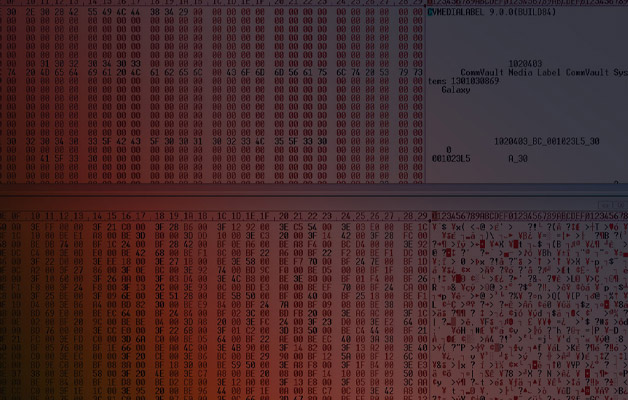
  • Data-bearing media is mistaken for ordinary paper records.
  • Decisions depend on incomplete spreadsheets and inconsistent descriptions.
  • Organisations lose confidence in their own archive inventories.

Archive Insight replaces assumption with evidence.

A Visual Catalogue Without Full Digitisation

Archive Insight captures enough information about each physical item to make the archive visible, searchable and actionable.

The objective is not to scan every page or immediately migrate every piece of media. It is to create a reliable first layer of intelligence over the collection.

For each archive box, Archive Insight can create:

  • A verified box record
  • A visual record of the box and its contents
  • Individual images of items within the box
  • Searchable text visible on covers, labels and media
  • Item type and category
  • Barcodes and identifying references
  • Dates and date ranges
  • Handwritten descriptions where legible
  • Manufacturer or media information where visible
  • Physical-condition observations
  • Confidence and review indicators
  • Box-to-item chain of custody
  • A record of subsequent review decisions

Users can then inspect the archive remotely and determine what should happen next.

Retain it. Scan it. Migrate it. Investigate it. Return it. Or destroy it.

More Than Document Indexing

Archive boxes frequently contain more than paper.

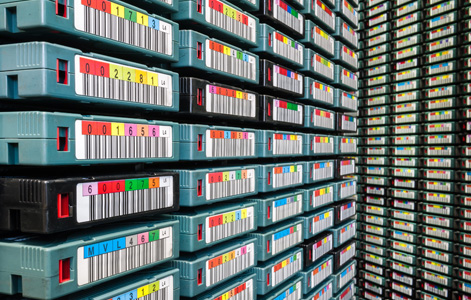
Alongside reports and folders, organisations may discover magnetic tapes, hard drives, optical discs, photographs, maps, drawings, microforms and other physical information assets.

Archive Insight can help identify and categorise items such as:

  • Files and document folders
  • Reports and bound volumes
  • Contracts and financial records
  • Engineering drawings
  • Maps and plans
  • Photographs and negatives
  • Film and audiovisual media
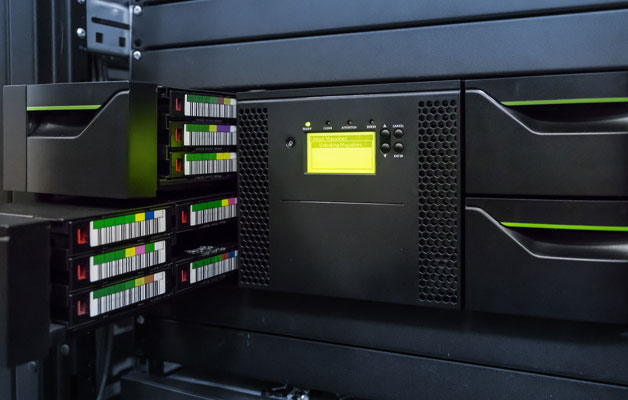
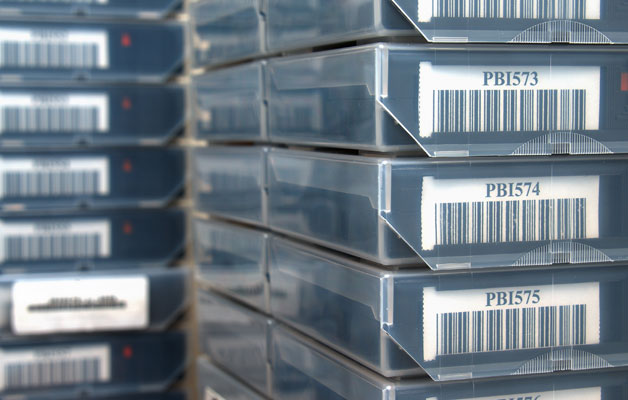
  • LTO and other data tapes
  • Legacy magnetic cartridges
  • External and internal hard drives
  • Optical discs
  • Removable storage media
  • Unidentified or unusual items

This allows organisations to separate items requiring document scanning from those requiring specialist data recovery, media migration, conservation, legal review or secure destruction.

A box that appears to contain routine paper records may also contain the only surviving copy of important digital data. Archive Insight helps reveal that risk before a disposal decision is made.

How Archive Insight Works

1. Collection Assessment

Tape Ark begins by understanding the scale, location and condition of the archive.

The assessment can consider:

  • Number and location of boxes
  • Existing box inventories
  • Storage vendors and facilities
  • Current retrieval and storage costs
  • Box ownership and business function
  • Record classes and retention requirements
  • Geographic or jurisdictional restrictions
  • Known data-bearing media
  • Priority collections
  • Digitisation or migration objectives
  • Destruction and disposition requirements

This establishes the processing priorities, information fields and decision workflows required for the project.

2. Box Reconciliation

Each box is connected to its existing inventory record and assigned a controlled processing status.

Identifiers, barcodes, storage references and available metadata are reconciled so that the physical box remains connected to its originating location, owner and collection.

Missing, duplicated, damaged or unexpected boxes are placed into an exception process rather than being silently omitted.

3. Controlled Item Capture

The contents of each box are handled through a structured visual-capture process.

Items are recorded individually while preserving their relationship to the original box. This creates a high-quality visual record without requiring every page to be scanned or every digital medium to be read.

The process is designed to minimise handling while capturing the information needed for identification, review and decision-making.

4. Catalogue Creation

Visible information is converted into structured, searchable catalogue records.

Rather than producing an unorganised collection of images or text fragments, Archive Insight creates records that can be searched, filtered, reviewed and exported.

Depending on the item, the catalogue may include:

  • Item category
  • Primary title or label
  • Barcode or media identifier
  • Visible names and reference numbers
  • Dates
  • Handwritten notes
  • Media type
  • Manufacturer
  • Capacity or format information
  • Physical condition
  • Box identifier
  • Item sequence
  • Review status

The catalogue structure can be aligned with customer terminology, record classes and downstream systems.

5. Confidence and Quality Review

Not every archive item is clear.

Labels may be damaged, handwriting may be difficult to interpret, items may overlap and some media may be unfamiliar. Archive Insight identifies records requiring review instead of presenting uncertain information as fact.

A quality workflow can include:

  • Confidence indicators
  • Automated exception identification
  • Human verification
  • Correction and approval
  • Audit history
  • Customer subject-matter review
  • Reprocessing where required

This concentrates human attention on ambiguous or high-value items rather than requiring manual entry for the entire collection.

6. Remote Review and Action

Authorised users can review catalogue records and item images without physically recalling the boxes.

Different stakeholders can assess the same collection according to their responsibilities:

  • Records teams can apply retention rules.
  • Legal teams can identify holds and relevant material.
  • Business units can confirm continuing value.
  • Technical teams can identify data-bearing media.
  • Archivists can recognise historically important items.
  • Digitisation teams can define scanning priorities.
  • Security teams can approve destruction.

Decisions are recorded against the item or box, creating a defensible path from discovery to final action.

Search Across the Physical Archive

Archive Insight turns a warehouse collection into an information resource.

Users can search and filter available catalogue information by fields such as:

  • Box number
  • Barcode
  • Item type
  • Visible title or label
  • Keyword
  • Department
  • Owner
  • Date or date range
  • Media type
  • Manufacturer
  • Project or reference number
  • Physical condition
  • Retention category
  • Review status
  • Recommended action

Instead of recalling boxes based on an uncertain description, users can inspect relevant items remotely and request only what is actually needed.

This can dramatically reduce unnecessary retrievals, transport, handling and re-filing.

Scan Less by Understanding More

Large document-scanning programs often begin with a box count rather than an understanding of the contents.

This can lead to organisations paying to scan duplicate records, expired material, blank forms, obsolete reference documents and information with no continuing business value.

Archive Insight introduces a decision point before full digitisation.

By visually cataloguing and grouping the contents first, organisations can determine:

  • What genuinely requires scanning
  • What should remain in physical form
  • What has already been digitised
  • What is duplicated
  • What has reached the end of retention
  • What requires legal or regulatory review
  • What contains sensitive information
  • What should be prioritised
  • What should be securely destroyed

The organisation can then direct scanning expenditure toward the information with the greatest continuing value.

Find Digital Media Hidden in Paper Archives

Data-bearing media frequently becomes separated from the systems and people that created it.

Tapes, disks and drives may be placed into archive boxes alongside reports, catalogues or project files. Over time, their descriptions become incomplete and the hardware required to access them becomes obsolete.

Archive Insight can identify these items before they are overlooked or destroyed.

Once discovered, Tape Ark can assess the media and recommend an appropriate next step:

  • Catalogue and retain
  • Read and identify
  • Migrate to the cloud
  • Virtualise for future recovery
  • Extract selected data
  • Preserve as part of a legal hold
  • Securely destroy after approval

This connects physical archive-box discovery with Tape Ark’s wider media audit, data migration and cloud archive services.

Build a Defensible Disposition Process

Destroying archive material without reliable information creates risk. Retaining everything forever creates cost and risk of a different kind.

Archive Insight supports evidence-based disposition.

Each decision can be associated with the relevant box or item, together with its review status, authority and final action. This allows the organisation to demonstrate that material was assessed before it was retained, digitised, migrated or destroyed.

A disposition workflow can include:

  • Item identification
  • Preliminary classification
  • Retention review
  • Legal-hold check
  • Business-owner approval
  • Digitisation or migration instruction
  • Destruction authorisation
  • Completion evidence
  • Audit record

The process can be adapted to the organisation’s governance policies and approval requirements.

Designed for Large Collections

Archive Insight is intended for collections that are too large for conventional manual indexing.

A project may involve one warehouse, multiple storage vendors or collections distributed across cities and countries. Tape Ark can establish a consistent capture and review process across the entire estate.

Central reporting can show:

  • Boxes expected
  • Boxes received or accessed
  • Boxes processed
  • Items catalogued
  • Records requiring review
  • Priority items identified
  • Digitisation decisions
  • Media-migration candidates
  • Retention outcomes
  • Destruction approvals
  • Exceptions and unresolved items
  • Overall project progress

This gives the organisation one view of a collection that may previously have been divided across storage vendors, departments and spreadsheets.

Use Archive Insight as an Assessment or Ongoing Service

Archive Insight can support several engagement models.

Collection Assessment

A representative sample is processed to determine what the archive contains, assess index quality and estimate the potential value of a wider program.

Priority Collection Review

Specific boxes are selected because they relate to litigation, regulatory obligations, a property portfolio, a major project, a business sale or another immediate requirement.

Full Archive Indexing

A large collection is processed systematically to create an item-level visual catalogue and support retention, digitisation and disposition decisions.

Storage Reduction Program

Archive Insight is used to identify expired, duplicate and low-value material before approving secure destruction and reducing recurring warehouse costs.

Digitisation Preparation

The collection is catalogued and triaged before scanning, allowing only approved and valuable records to enter the digitisation workflow.

Media Discovery and Migration

Tapes, drives and other data-bearing media are identified within archive boxes and directed into an appropriate audit, recovery or cloud-migration program.

Built for Real-World Archive Conditions

Archive collections are rarely clean or consistent.

Boxes may contain mixed materials, faded labels, handwriting, obsolete terminology, damaged folders and items that no longer match the original inventory.

Archive Insight is designed around this reality.

The service can accommodate:

  • Printed and handwritten labels
  • Mixed item types
  • Barcoded and non-barcoded material
  • Incomplete descriptions
  • Unidentified media
  • Damaged or worn items
  • Industry-specific terminology
  • Customer-defined catalogue fields
  • Records requiring specialist interpretation
  • Items requiring human confirmation

The objective is not to pretend every item can be classified perfectly without review. It is to automate high-volume catalogue creation while clearly isolating the exceptions that require human judgement.

Security and Chain of Custody

Archive boxes may contain personal information, commercial records, legal documents, intellectual property or regulated data.

Tape Ark applies controlled handling and information-security processes throughout the project.

Controls can include:

  • Box and item identification
  • Documented chain of custody
  • Restricted processing areas
  • Role-based access
  • Customer-approved workflows
  • Secure image and catalogue storage
  • Review and correction history
  • Retention and deletion controls
  • Approved destruction processes
  • Project audit records

Tape Ark maintains ISO 9001 and ISO/IEC 27001 certifications, together with Cyber Essentials and Cyber Essentials Plus, supporting an approach based on quality, information security and traceable operational control.

Industries Using Archive Insight

Government and Public Sector

Create visibility across policy records, land information, infrastructure files, departmental archives, maps and long-retention collections. Support information requests, retention review and defensible disposition.

Energy, Mining and Resources

Identify technical reports, well files, seismic media, maps, engineering drawings, environmental studies and project records. Reconnect physical archives with cloud data and modern analysis environments.

Financial Services

Improve control over contracts, lending records, customer files, transaction records, compliance documents and acquired business archives. Support audits, discovery and regulatory retention.

Healthcare and Life Sciences

Catalogue administrative records, research material, study documentation and retained media while applying controlled access and disposition requirements.

Education and Research

Reveal manuscripts, theses, notebooks, field records, research data, photographs and storage media that may have continuing academic or historical value.

Media and Entertainment

Identify scripts, production records, photographs, tapes, discs, promotional assets and other material that may support reuse, preservation or monetisation.

Property, Engineering and Construction

Organise plans, drawings, site records, contracts, inspection reports and project documentation across long-lived property and infrastructure portfolios.

Start with a Representative Sample

You do not need to commit an entire archive before understanding the opportunity.

A representative Archive Insight assessment can establish:

  • What is actually inside the boxes
  • How accurate the existing index is
  • Which catalogue fields can be captured
  • What proportion may require human review
  • How much material may be expired or duplicated
  • Which items are candidates for scanning
  • Whether data-bearing media is present
  • Potential warehouse-storage reductions
  • Indicative processing volumes and costs
  • Recommended next steps for the wider collection

The sample becomes an evidence base for the business case.

Make An Inquiry

The Maverick Mindset
Knowledge is power – but only if the knowledge is accessible. To move forward we must look back, understand the data we have and start thinking about how to utilize it – that is a big data frame of mind.

A Welcome to Country

Tape Ark was founded and proudly grown from an Australian based company to an international success.

Tape Ark acknowledges the Traditional Custodians of Country throughout Australia and recognise their continuing connection to land, sea and community. We pay our respects to their Elders past, present and future, and extend that respect to all Aboriginal and Torres Strait Islander peoples today.

Need help getting started?
Contact Tape Ark

Tape to cloud migration
Frequently Asked Questions

Customer success stories
Hear from customers

The Tape Ark team
Meet the team

Cloud partners
See our cloud partners

Request a quote
Contact us here

Follow Us